Today, we live in a world which runs on the essence of "Time is Money". We used to hand our house keys to a neighbor with a full conversation attached: here's how the lock sticks, don't let the cat out, call me if anything feels wrong. Now we hand our front door to an app, a stranger's face on a screen, a four-digit code that expires in six hours. We call this progress. In some ways it is. In another, quieter way, it's the story of how we learned to trade something priceless for something merely fast.
The Currency We Stopped Noticing
Trust used to be an expensive, yet valuable currency, built over a long time. A handshake carried weight, because the two people shaking hands had shared history, because they valued the other's opinion of themselves. But not anymore.
Convenience culture didn't so much as destroy trust, rather found a way to counterfeit it. Every platform we use asks us for that trust instantly, a five-star rating, a blue checkmark, a "verified" badge. It does it; so that we dont have to do the slow and tedious task of vetting each and every component by ourselves. And for most of the time it works; so we conclude that the shortcut is just as good as the real thing.
How evolution warped time
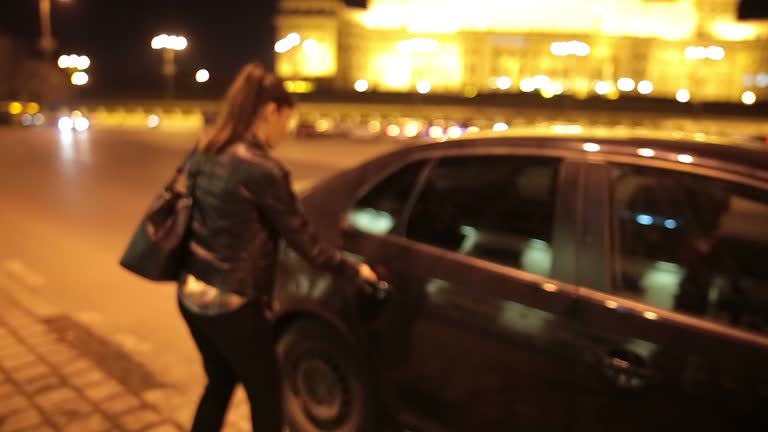
Our parents used to say things like "Don't trust people you knew online" , " Don't get into a stranger's car". Yet here we are booking a ride online, getting into a stranger's car in the middle of the night, just because its easier than driving to wherever it is we want to go. Yet how trustworthy can that individual be, should our trust be so cheap that it be equal to the convenience of taxi ride?
But that's not all is it? No! There's much more, we accept terms and conditions we never read because it costs us ten minutes that we "apparently" don't have, we let an app constantly track our location because disabling it means re-entering an address every time, we reuse the same password because using a unique one for every account is friction that we have deemed not worth paying.
Now none of these choices are irrational. Each one, on its own, is a fair trade of a small risk for a large convenience. The problem is that risk doesn't announce itself individually. It accumulates. Somewhere in the aggregate of ten thousand small conveniences, a person's entire life — financial, physical, social — becomes legible and exposed to systems that were optimized for frictionlessness, not for care.
The Quiet Cost
The people who bear the cost of this trade are rarely the ones who benefit most from the convenience. The gig worker whose livelihood depends on a rating system with no appeal process. The person whose data was sold three times before they ever read a privacy policy. The elderly relative who trusted a voice on the phone that sounded exactly like a grandchild, because we built a world where verifying identity remotely is now genuinely difficult, even as we made transacting remotely effortless.
We built frictionless doors before we built reliable locks. None of this is an argument for returning to a world of handwritten ledgers and neighborhood-only trust. That world had its own exclusions and cruelties — it was often only convenient in the sense that it was easy to keep certain people out. The point isn't that convenience is the enemy. It's that we've stopped treating it as a trade at all, and started treating it as a free good.
The impossible reunion
But what if it was possible to put these two worlds together, a modern platform, convenient and easy to use, but based on the principle of trust. That's exactly what 'LATELY' is, a platform that brings you the things you need, from your own circle of trust.
To not just rent or borrow, but to do so with intention. To enjoy the convenience the world so frantically chases, without the price that society is paying blindly!